
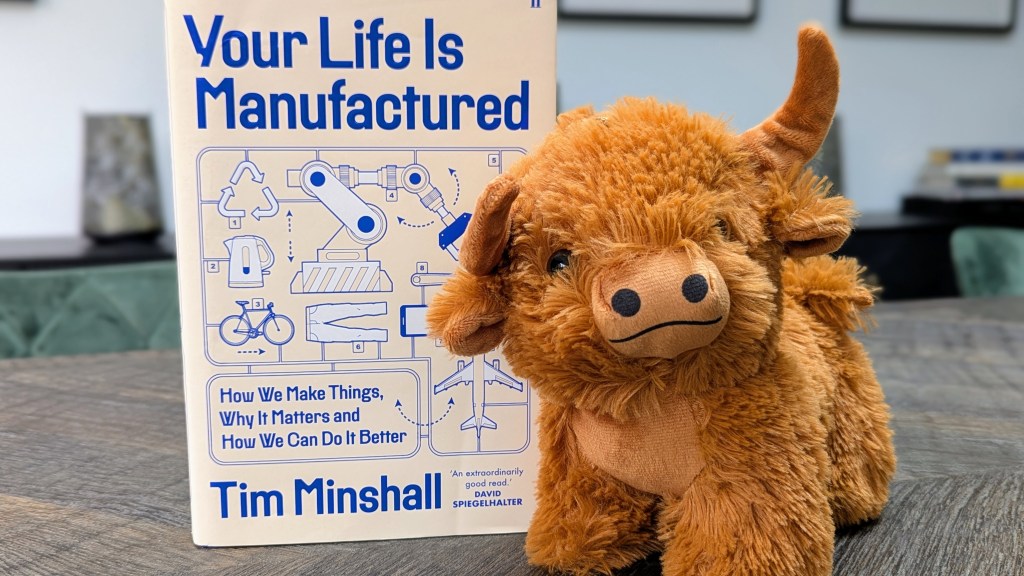
This is a book for the curious.
I don’t have heaps to say here. Bought for a holiday read and glad I read it, but unless you’re interested in how stuff gets made, moved about and how the world of manufacturing is changing, it’s going to be a really tough sell.
What surprised me from this book is just how much manufacturing process sits behind even the most mundane of items (Minshall uses toilet paper as his opening example), and the scale at which stuff gets made and moved is mind-boggling.
Minshall has also convinced me that Britain has made a serious mistake in undervaluing its manufacturing sector and drifting toward a “post-industrial” or “knowledge” economy. We have allowed our manufacturing base to shrink too far and it’s going to be difficult to rebuild what we’ve lost. We now depend on enormously complex global systems for everyday goods, but these systems can fail when disrupted by shocks such as pandemics (we saw this during COVID), wars, or logistics problems.
So let’s encourage manufacturers back into Britain and ease our exposure to fragile supply chains and geopolitics. I’m not suggesting we go full-blown protectionist, but we should definitely be easing the pressure on ourselves.
We, as consumers, can help create the demand for this change. We’ve become far too price-sensitive. Countries like China – with access to economies of scale and cheap labour – will always win out if we let price solely dictate our buying decisions. Instead, let’s include price as part of a wider set of considerations, like environmental impact, sustainable manufacturing, brand ethics and where (and who) our money is going to. I’ll start – I’m uninstalling Temu today.
Book club model: Yusuf

 Glyphs & Graphs